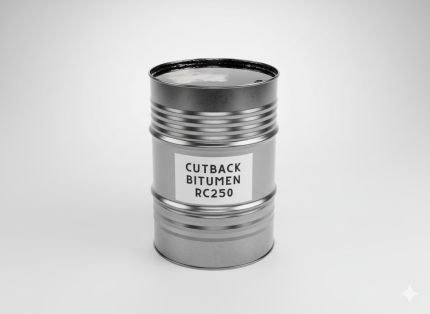
Bitumen VG 40

Get Quotation
Report Abuse
Description

Introduction to Bitumen VG 40

Overview of Bitumen

Bitumen, also known as asphalt in some regions, is a sticky, black, and highly viscous liquid or semi-solid form of petroleum. It is a crucial material in the construction and maintenance of roads, as well as various industrial applications. Bitumen is derived from crude oil through the refining process, which separates it from lighter hydrocarbons.

Definition of VG 40

Viscosity Grade 40, is a specific classification of bitumen based on its viscosity, which measures its resistance to flow. This grade is particularly suitable for regions with high traffic and heavy load conditions due to its excellent durability and performance characteristics.

Importance of Bitumen  in Construction

It is highly valued in the construction industry for its superior quality and performance. It is used in the construction of highways, runways, and other heavy-duty infrastructure projects where high durability and load-bearing capacity are required. Its resistance to deformation under high temperatures makes it an ideal choice for such applications.


Chemical Composition of Asphalt VG 40

Primary Components

The primary components of Asphlat VG 40 include asphaltenes, resins, and oils. Asphaltenes contribute to the bitumen’s solid structure and strength, resins provide adhesiveness, and oils help in maintaining its fluidity and flexibility.

Additives and Their Roles

Various additives are mixed with Viscosity Grade 40 to enhance its properties. These include polymers for increased elasticity, anti-stripping agents to improve adhesion with aggregates, and stabilizers to maintain performance under different environmental conditions.

Chemical Properties

Viscosity grade VG 40 has a complex chemical structure that gives it unique properties such as high viscosity, resistance to water, and thermal stability. Its chemical composition can be tailored to meet specific requirements by adjusting the proportions of its components and adding suitable additives.


Production Process of Viscosity Grade 40

Raw Materials Used

The production  starts with the selection of high-quality crude oil. The choice of crude oil is critical as it determines the quality and characteristics of the final product.

Refining Process

The refining process involves the distillation of crude oil to separate lighter hydrocarbons, followed by vacuum distillation to extract the heavier components. The residue obtained is then processed to produce different grades of bitumen, including VG 40.

Quality Control Measures

Strict quality control measures are implemented during the production VG 40 to ensure it meets industry standards. These measures include testing for viscosity, penetration, softening point, and other key parameters.


Applications of Bitumen VG 40

Road Construction

It is extensively used in road construction due to its high durability and resistance to heavy traffic loads. It is used in the base, binder, and wearing courses of flexible pavements.

Airport Runways

The high load-bearing capacity and thermal stability of  VG 40 make it ideal for use in airport runways, which are subject to heavy aircraft landings and takeoffs.

Waterproofing

It is also used in waterproofing applications to protect structures from water ingress. Its water-resistant properties make it an effective barrier against moisture.

Industrial Uses

In addition to construction,  VG 40 finds applications in various industrial processes, including the production of roofing materials, sealants, and adhesives.


Advantages of Using Bitumen VG 40

Durability

Bitumen VG 40 offers excellent durability, making it suitable for high-traffic areas and heavy-duty applications. Its resistance to deformation and cracking ensures long-lasting performance.

Cost-Effectiveness

Despite its superior quality,  VG 40 is cost-effective due to its long lifespan and reduced maintenance requirements. It provides good value for money in large infrastructure projects.

Environmental Benefits

Using Asphalt VG 40 can contribute to environmental sustainability. Its production and application can be optimized to reduce emissions, and it can be recycled for use in new construction projects.

Storage and Handling of Bitumen VG 40

Storage Requirements

Proper storage of Bitumen VG 40 is essential to maintain its quality. It should be stored in well-insulated tanks to prevent temperature fluctuations and degradation.

Handling Precautions

Handling Bitumen VG 40 requires adherence to safety protocols to avoid accidents and ensure the safety of workers. This includes using appropriate personal protective equipment (PPE) and following safe handling procedures.

Safety Measures

Safety measures for Bitumen VG 40 include regular inspections of storage facilities, proper ventilation during handling, and training for workers on safe practices and emergency response.


Comparison with Other Grades of Bitumen

VG 10 vs VG 40

VG 10 is softer and less viscous compared to VG 40, making it suitable for cooler climates and lighter traffic conditions. VG 40, on the other hand, is preferred for high-temperature regions and heavy traffic.

VG 30 vs VG 40

VG 30 is commonly used for standard road construction, while VG 40 is used for high-stress applications such as highways and runways. VG 40 offers better performance under extreme conditions compared to VG 30.

Polymer-Modified Bitumen vs VG 40

Polymer-modified bitumen (PMB) includes polymers to enhance its properties, offering superior performance compared to standard VG grades. However, VG 40 provides a cost-effective alternative with good performance for many applications.


Innovations in Bitumen VG 40

New Production Techniques

Advancements in refining and blending technologies have led to the development of innovative Bitumen VG 40 formulations with enhanced performance characteristics. These include polymer-modified bitumen (PMB) and warm mix asphalt (WMA) technologies, which offer improved durability, workability, and environmental sustainability.

Sustainable Alternatives

Research into sustainable alternatives to traditional Bitumen VG 40 is ongoing, with a focus on bio-based binders and recycled materials. These alternatives aim to reduce the environmental footprint of asphalt pavements while maintaining or improving performance.

Technological Advancements

Emerging technologies such as nanotechnology and 3D printing hold promise for revolutionizing the production and application of Bitumen VG 40. Nanomodified binders and additive manufacturing techniques offer opportunities for fine-tuning asphalt properties and optimizing construction processes.


Case Studies of Bitumen VG 40

Successful Road Projects

Numerous road projects around the world have demonstrated the effectiveness of Bitumen VG 40 in achieving durable and high-performance pavements. Case studies highlight the benefits of proper mix design, construction practices, and quality control measures in ensuring project success.


Regulatory Standards for Bitumen VG 40

International Standards

International organizations such as the American Society for Testing and Materials (ASTM) and the European Committee for Standardization (CEN) have established standards for Bitumen VG 40, covering properties, testing methods, and performance requirements. Compliance with these standards ensures consistency and interoperability in the global market.

National Regulations

National governments and agencies also regulate the production, quality, and use of Bitumen VG 40 through legislation, codes of practice, and specifications. These regulations aim to protect public health and safety, safeguard the environment, and ensure the quality and performance of infrastructure projects.

Compliance Requirements

Manufacturers, contractors, and end-users of Bitumen VG 40 must comply with regulatory requirements related to production, transportation, storage, handling, and disposal. This requires adherence to industry standards, certification programs, and quality assurance processes.


Cost Analysis of Bitumen VG 40

Price Factors

The cost of Bitumen VG 40 is influenced by various factors, including crude oil prices, production and transportation costs, market demand and supply dynamics, and regulatory compliance requirements. Fluctuations in these factors can affect the final price of Bitumen VG 40.

Cost-Benefit Analysis

Despite its initial cost, Bitumen VG 40 offers long-term benefits in terms of durability, performance, and life cycle cost savings. Conducting a cost-benefit analysis can help stakeholders evaluate the economic feasibility of using Bitumen VG 40 compared to alternative materials.

Market Price Trends

Market price trends for Bitumen VG 40 are influenced by global economic conditions, geopolitical events, technological advancements, and environmental regulations. Monitoring price trends and forecasting future developments are essential for effective cost management and project planning.


Specification of VG 40

Specification Unit Value Test Method
Absolute Viscosity, at 60 ◦C Poise Min 3200 ASTM D4402
Kinematic Viscosity, at 135 ◦C CST Min 400 ASTM D2170
Flash Point ◦C Min 220 ASTM D2170
Solubility in Trichloroethylene %WT Min 99 ASTM D2170
Penetration Value, at 25 ◦C 0.1mm 40-60 ASTM D5
Softening Point ◦C Min 25 ASTM D36
Viscosity Ratio, at 60 ◦C ◦C Max 4 ASTM D4402
Ductility at 25 ◦C, after thin film oven test Cm Min 25 ASTM D113
Shipping
Reviews (0)

Reviews

There are no reviews yet.

Be the first to review “Bitumen VG 40”

Your email address will not be published. Required fields are marked *

Questions & Answers
Loading...
Shipping & Delivery

MAECENAS IACULIS

Vestibulum curae torquent diam diam commodo parturient penatibus nunc dui adipiscing convallis bulum parturient suspendisse parturient a.Parturient in parturient scelerisque nibh lectus quam a natoque adipiscing a vestibulum hendrerit et pharetra fames nunc natoque dui.

ADIPISCING CONVALLIS BULUM

  • Vestibulum penatibus nunc dui adipiscing convallis bulum parturient suspendisse.
  • Abitur parturient praesent lectus quam a natoque adipiscing a vestibulum hendre.
  • Diam parturient dictumst parturient scelerisque nibh lectus.

Scelerisque adipiscing bibendum sem vestibulum et in a a a purus lectus faucibus lobortis tincidunt purus lectus nisl class eros.Condimentum a et ullamcorper dictumst mus et tristique elementum nam inceptos hac parturient scelerisque vestibulum amet elit ut volutpat.

More Products

Bitumen PG 64/22

Introduction: Welcome to our comprehensive guide on Bitumen PG 64/22, a vital component in modern construction and infrastructure projects. Explore
Get Quotation

bitumen 90/40

Bitumen 90/40 is the soft grade of oxidized bitumen with a softening point and penetration ranges 90C + 5 and penetration
Get Quotation

VANSE SL18-6 35KW Hydraulic Drive Type Concrete Spreader Machine With Inlet Hopper Brushes for Sale Use Concrete Ground

VANSE SL18-6 35KW Hydraulic Drive Type Concrete Spreader Machine With Inlet Hopper Brushes for Sale Use Concrete Ground PRODUCT SHOW
Get Quotation

Bitumen 85/30

Bitumen 85/30 is the soft grade of oxidized bitumen with softening port 85C + 5 and penetration 30 +5 desimillimiter.
Get Quotation

Bitumen 160/220

Bitumen 160/220 stands as a cornerstone in the realm of road construction and asphalt pavement production.. Specifications Overview Grade: Bitumen Penetration Grade 160/220
Get Quotation
Product Enquiry

Product Enquiry